Everything a Kolkata parent needs to know before enrolling their child in dance — age groups, dance forms, what to look for, honest fees, and how to choose without wasting money on a mismatch.
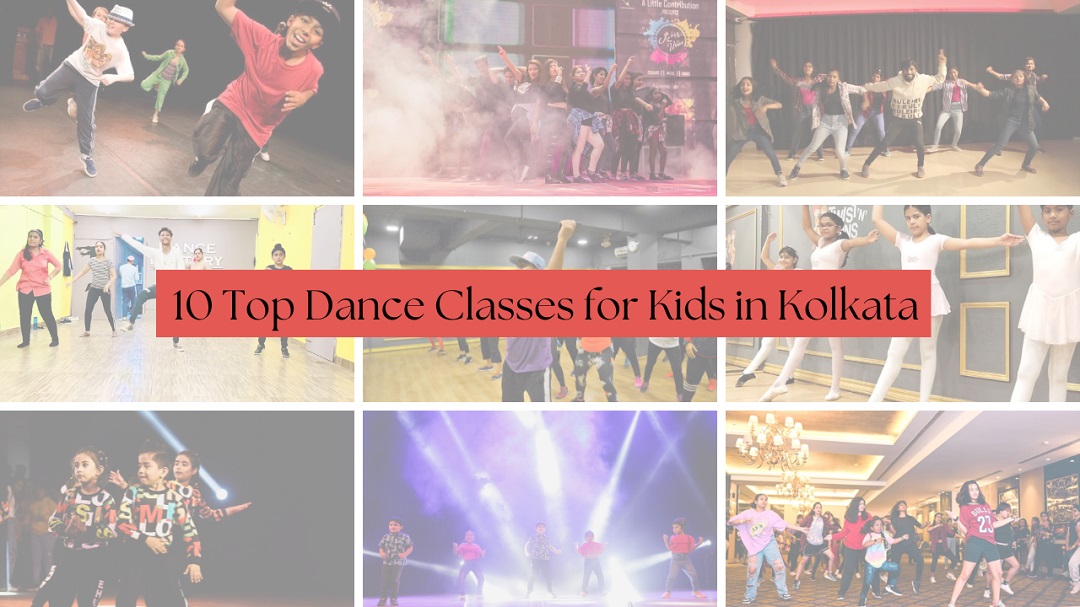
Kolkata has a rich culture of dance — but the number of options for children’s dance classes has exploded over the past decade. From professional academies with graded examination structures to neighbourhood hobby classes, the range is wide and the quality varies just as much. This guide is written for parents who want to make a well-informed decision the first time, without spending six months and multiple registration fees finding out what works.
Twist N Turns has been teaching children to dance since 2005. Across our 8 studios and 20,000+ students trained, we’ve seen what helps children thrive and what leads to drop-out. This guide reflects that experience honestly — including where Twist N Turns is the right fit, and where it isn’t.
Start Here: What Age Is Your Child?
The most common mistake parents make is enrolling a child in a class that’s age-appropriate on paper but developmentally wrong for that particular child. Age ranges are guides, not rules.
Toddlers: 3–5 Years — Creative Movement
Children under 5 are not ready for structured technique. What they are ready for: imaginative movement, rhythm play, socialisation, and gross motor development.
Creative Movement classes use music, props, storytelling, and play to build:
- Basic rhythm recognition
- Spatial awareness (personal space, moving through space)
- Gross motor control (skipping, jumping, galloping)
- Social skills (taking turns, group movement)
- Body confidence
This is the foundation everything else builds on. Children who spend 1–2 years in quality Creative Movement classes take to formal ballet or kathak with noticeably better posture, timing, and focus.
What to look for at this age: A warm, patient instructor who uses storytelling and play rather than drilling technique. Small class sizes (8–12 children maximum). No pressure on perfect form.
Kids: 6–9 Years — The Ideal Starting Point for Formal Training
This is the sweet spot. Children at 6 have developed enough attention span, bilateral coordination, and social maturity to benefit from structured dance instruction. At the same time, they’re still young enough that their bodies adapt rapidly to new movement patterns.
Best dance forms to start at this age:
- Ballet — The universal foundation. Develops turnout, posture, strength, and musicality. Supports every other style studied later.
- Kathak — Develops rhythm (taal), footwork, and expressive storytelling. Can begin from age 6 with appropriate curriculum.
- Bharatanatyam — South Indian classical form. Structured, physical, and culturally rich. Most academies recommend starting from 6–7.
- Hip Hop — If your child is already rhythm-driven and energetic, this is a natural first style. Less structured than classical forms but develops groove, coordination, and confidence rapidly.
- Creative Movement → Ballet transition — Children who started Creative Movement at 3–5 often transition naturally into Ballet at 6–7.
Pre-Teens: 9–12 Years
Children who didn’t start at 6 can absolutely catch up — the body is still highly adaptable at 9–12. Pre-teens are often more self-aware, which can work for or against them. A good instructor at this level maintains technical rigour while being sensitive to the social dynamics of this age group.
Dance forms well-suited to this age:
- Ballet — Still accessible, though competition in graded examinations may be with children who started earlier.
- Jazz (ISTD syllabus) — Technically demanding, upbeat, and very popular with pre-teen girls.
- Contemporary — Fluid, expressive, and increasingly competitive in India.
- Bollywood — High energy, culturally familiar, and great for performance confidence.
- Kathak / Bharatanatyam — Both remain appropriate for new starters at this age.
Teens: 13–17 Years
Teenagers can start from scratch and progress quickly — particularly in non-classical styles. However, classical forms like Ballet started fresh at 15+ will always be more limited in technical ceiling than students who began at 6.
For teens, the focus shifts from building foundations to developing performance quality, artistic expression, and style identity. This is also when Salsa, Bachata, Hip Hop, and Contemporary become genuinely compelling options.
The Dance Forms — Compared for Parents
Ballet
Best for: Ages 4–12 starting; continuing to 18+
What it builds: Posture, strength, turnout, musicality, discipline, patience
Examination structure: Royal Academy of Dance (RAD) and ISTD graded examinations — internationally recognised
Reality check: Ballet is the most technically demanding style to teach well. If the instructor isn’t certified and the curriculum isn’t syllabus-based, what you’re getting is not ballet — it’s approximate movement in ballet shoes.
At Twist N Turns: Ballet classes follow structured graded curriculum. Intakes happen four times a year (January, April, July, October). All ballet instructors are trained and certified.
Jazz (ISTD Syllabus)
Best for: Ages 6+
What it builds: Coordination, showmanship, rhythmic precision, flexibility, stage presence
Unique point: Twist N Turns is the only institute in Kolkata teaching Jazz under the ISTD (Imperial Society of Teachers of Dancing, UK) syllabus — the same examination board that certifies jazz training across the UK, Australia, and internationally. This matters if your child ever wants international examination certification.
Reality check: “Jazz dance” is a loose term in India. Most places calling themselves jazz classes are not ISTD-affiliated. If the examination board matters to you, verify before enrolling.
Kathak
Best for: Ages 6+
What it builds: Rhythm (taal), footwork, hand gestures (mudras), expressive storytelling, posture
Cultural value: One of India’s eight classical dance forms, with roots in North Indian devotional and court traditions. Recognised by the Sangeet Natak Akademi.
Examination structure: Graded examinations available through Prayag Sangeet Samiti and other recognised bodies.
At Twist N Turns: Kathak classes are taught by trained and experienced instructors. Students are prepared for graded examinations.
Bharatanatyam
Best for: Ages 6–7+
What it builds: Strength, flexibility, nritta (pure movement), abhinaya (expressive storytelling), stamina
Cultural context: Tamil Nadu’s classical form, with roots in Devadasi and temple traditions. Recognised globally and taught in conservatories worldwide.
Physical demands: More physically demanding than it looks — strong knee bends (aramandi), stamping footwork, and sustained postures require real fitness. Children who study Bharatanatyam typically develop exceptional core strength and body control.
Hip Hop
Best for: Ages 6+ (some studios start from 5)
What it builds: Groove, rhythm, coordination, confidence, freestyle expression
Reality check: “Hip Hop” at children’s dance studios varies enormously in quality and content. Genuine Hip Hop education covers breaking, locking, popping, and freestyle elements in age-appropriate ways. What’s sometimes taught is choreographed Bollywood-adjacent movement with a different label. Ask to observe a class.
At Twist N Turns: Hip Hop classes across our 8 studios are structured by age group and level.
Bollywood
Best for: Ages 6+
What it builds: Performance confidence, energy, cultural connection, ensemble dancing
Why kids love it: Familiar music, upbeat tempo, and the immediate reward of being able to perform a recognisable song.
Reality check: Bollywood is not a codified technique — it draws from classical Indian, Hip Hop, Jazz, and folk traditions. A good Bollywood teacher draws on real training in these disciplines. At its worst, it’s just copying moves from YouTube.
Contemporary / Creative Movement
Best for: Creative Movement from 3–5; Contemporary from 9+
What it builds: Body awareness, improvisation, emotional expression, physical intelligence
Why it matters: Contemporary is increasingly competitive in Indian dance competitions and the most technically respected of the “modern” forms. It blends Ballet, Jazz, and free movement — students who later pursue contemporary seriously almost always need a Ballet foundation.
What to Look For in a Children’s Dance Studio
Beyond the dance form, the studio environment and teaching quality determine whether your child will stick with it or quietly ask you to stop going. Here’s what actually matters:
1. Instructor qualifications
Ask directly: what is the instructor’s training background, certification, and years of teaching experience specifically with children? Technique knowledge and the ability to teach children safely and joyfully are different skills.
2. Class size
For children under 10, no more than 12–15 per class is a meaningful ceiling. For teens, 15–20 is reasonable. Larger classes mean less individual attention, more time waiting, and faster burnout for less confident learners.
3. The floor
Concrete or tile floors are genuinely dangerous for developing joints, especially in Ballet and Kathak where repetitive impact is part of training. Look for sprung wooden flooring (floors with a slight give) or appropriate dance matting. Twist N Turns’ studios use sprung wooden floors across all locations.
4. Dress code and discipline
A studio that enforces a proper dress code and basic class discipline is usually one that takes teaching seriously. This isn’t about rigidity — it’s about building a learning environment. Children learn better in structured spaces.
5. Performance opportunities
Does the studio give children the chance to perform? Annual shows, inter-studio events, and small stage performances are crucial for developing performance confidence and giving children tangible goals to work toward. The studio should be able to tell you what performance opportunities exist in a typical year.
6. Communication with parents
Can you watch occasional classes? Does the instructor provide feedback on your child’s progress? Are you informed about examination cycles, term dates, and any changes? Quality studios treat parents as partners, not inconveniences.
Honest Fees Guide — Kids’ Dance Classes in Kolkata
Prices vary by studio, style, frequency, and location. Here’s a realistic range for Kolkata:
| Type | Approx. Monthly Range |
|---|---|
| Group class (once/week) — Hip Hop, Bollywood, Zumba | ₹1,500 – ₹2,200 |
| Group class (twice/week) — Ballet, Jazz, Kathak, Contemporary | ₹2,000 – ₹3,500 |
| Classical forms (Bharatanatyam, Odissi, Kathak) | ₹1,500 – ₹2,800 |
| Creative Movement (toddlers) | ₹1,200 – ₹2,000 |
| Private / semi-private lessons | ₹600 – ₹1,200 per session |
At Twist N Turns specifically:
- Course fees, charged every 4 weeks (not monthly): ₹1,999 (once/week), ₹2,999 (twice/week), ₹3,499 (thrice/week) — use the live fee calculator for the exact amount on longer commitments and discounts
- One-time enrolment fee: ₹1,770 on a 4-week plan, reduced to ₹885 on a 12-week commitment, and waived entirely on a 24-week commitment
- Free trial class: available at all 8 studios, no deposit required
- Sibling discount, multi-style discount, and annual payment discount available — ask your studio
Pay-per-class option (for trying out):
- Single class: ₹599
- 8-class pack: ₹2,999 (valid 28 days, ₹375/class)
- 20-class pack: ₹5,999 (valid 70 days, ₹300/class) — see the full PPC breakdown for all package sizes
The 8 Twist N Turns Studio Locations — Kids’ Classes Available
| Studio | Area | Contact |
|---|---|---|
| Salt Lake | Sector V, Salt Lake City | 98310 18015 |
| Ballygunge | South Kolkata | 98310 18015 |
| Dum Dum Park | North Kolkata | 98310 18015 |
| Ruby | EM Bypass / Ruby area | 98310 18015 |
| New Alipore | South-West Kolkata | 98310 18015 |
| New Town AA1 | Action Area I, New Town | 98310 18015 |
| Rajarhat–New Town AA2 | Action Area II, Rajarhat | 98310 18015 |
| Madhyamgram | North 24 Parganas | 98310 18015 |
All studios offer: sprung wooden floors, mirrored walls, air-conditioning, changing rooms, and washrooms.
How to Enrol — Step by Step
- Book a free trial — call 98310 18015, WhatsApp 98310 18015, or book at twistnturns.in/free-trial.html
- Choose your studio and style — we’ll recommend the right batch based on your child’s age, experience, and schedule
- Observe the trial class — parents are welcome to watch
- Pay the enrolment fee (₹1,770, less on longer commitments) to confirm admission
- Get the dress code requirements from the studio — we’ll tell you exactly what to purchase
- Start the next scheduled batch — most styles accept new students at term start or month start
A Final Word on Consistency
Dance training is cumulative. A child who attends 80% of classes for 3 years will progress more than one who attends 100% for 6 months and then drops out. The single biggest predictor of a child’s progress in dance is not natural talent — it’s showing up regularly.
Choose a studio close enough to get to easily, at a time that fits your family’s schedule without friction, with an instructor your child genuinely responds to. That combination matters more than any other factor on this list.
Book a free trial at your nearest Twist N Turns studio today:
📞 98310 18015 | WhatsApp: 98310 18015 | twistnturns.in/free-trial.html