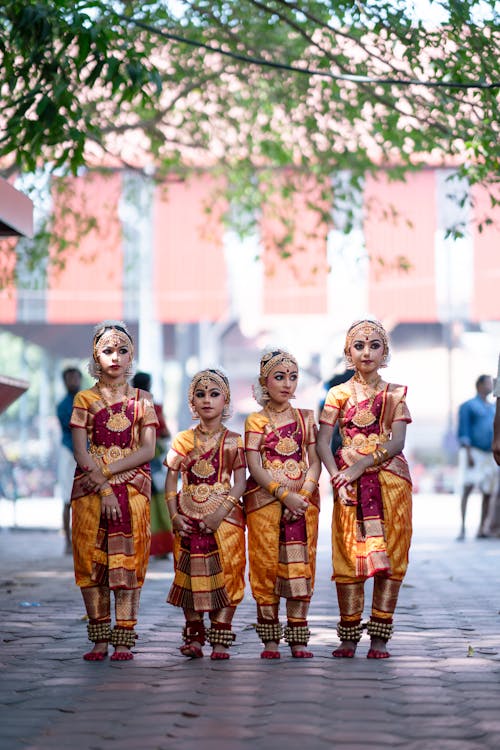
Where India’s Most Lyrical Classical Form Comes Alive
Searching for Odissi dance classes in Kolkata? Twist N Turns offers classical Odissi training for students from age 6 through adult — taught by trained gurus, in small batches, using a graded curriculum that takes you from your first stance to full performance readiness.
Whether you are a parent looking to give your child a connection to eastern India’s deepest classical art, a teenager seeking something genuinely disciplined and beautiful, or an adult finally acting on a long-held dream — we have a batch and a teacher for you.
What Is Odissi?
Odissi is one of the eight officially recognised classical dance forms of India, and among the oldest. Its roots lie in the Devadasi tradition of Odisha, where temple dancers known as maharis performed as an act of devotion in the great Jagannath temple at Puri. Stone sculptures inside the Udayagiri and Khandagiri caves near Bhubaneswar — dating back to the 1st century BCE — already depict poses unmistakably close to what Odissi dancers perform today.
The form is built on three defining elements:
- Tribhanga — the flowing S-curve of the body (head, torso, and hip each deflecting in a different direction), which gives Odissi its sculptural, wave-like quality
- Chowka — the wide, grounded square stance that evokes power and stability, contrasting with the lyrical tribhanga
- Abhinaya — expressive storytelling through the face, hands, and entire body; the navarasas (nine emotional essences) are the dancer’s palette
The mudra vocabulary is drawn from the Abhinaya Darpana and Natyashastra — single-hand and double-hand gestures that narrate stories of Radha and Krishna, the grandeur of Lord Jagannath, and the philosophy of the classical tradition.
How Odissi Differs from Bharatanatyam
Both are Indian classical forms, but they feel very different. Bharatanatyam is angular and geometric — its lines are straight, its positions precise and crisp. Odissi is softer, more lyrical, more fluid. The tribhanga creates curves where Bharatanatyam creates angles. Students often describe Odissi as the closest classical dance form to moving sculpture.
The Benefits of Learning Odissi
Physical
- Spinal awareness and posture — the tribhanga demands exceptional control of the spine; years of practice visibly improve how students carry themselves
- Leg strength and hip flexibility — chowka training builds quadriceps, glutes, and hip mobility that gym work rarely reaches
- Coordination and cardiovascular fitness — footwork patterns set to rhythm build stamina and full-body coordination
- Fine motor control — mudra precision develops the small muscles of the hands and fingers
Mental and Artistic
- Memory and focus — Odissi compositions are dense with rhythmic, gestural, and expressive layers; holding all of them simultaneously is serious cognitive work
- Emotional range — learning to embody the nine rasas builds expressive vocabulary that extends into everyday communication and stage presence
- Cultural depth — understanding the stories behind the mudras — the Gita Govinda, the Jagannath tradition, the Natyashastra — gives students a richer connection to Indian civilisation than any classroom can provide
Who Can Learn Odissi?
Children from age 6 — the ideal window to begin; young bodies adapt quickly to the tribhanga posture, and children absorb the storytelling tradition with natural openness. For children aged 4–6, our Creative Movement class introduces Odissi-inspired movement before formal training begins.
Teens — teenage students bring focus and emotional depth to abhinaya that younger children are still developing. Many of our most committed Odissi students are teenagers.
Adults — it is never too late. Adult beginners are welcome with no prior experience required. Many adults find Odissi to be the most rewarding creative pursuit they have ever undertaken.
Class Schedule
Current batch timings are shown below, pulled live from our studio sheet. Call or WhatsApp 9831018015 to confirm availability before joining.
How We Teach Odissi
Our programme follows the traditional guru-shishya method, adapted for contemporary studio learning. Students progress through clearly defined levels.
Foundation Level (Months 1–6). The two primary stances — tribhanga and chowka — basic footwork patterns, introductory mudras, and simple bhoomi pranam (earth salutation) sequences. This stage builds the invisible architecture on which all beautiful dancing rests.
Intermediate Level (Months 7–18). Full compositions — typically a mangalacharan (invocatory piece) and a pallavi (lyrical elaboration of a raga). Deepening mudra vocabulary, abhinaya work, and increasing rhythmic complexity. Ghungroos become part of every class.
Advanced Level (Year 2 onwards). The full traditional margam — dashavatara compositions, abhinaya pieces from the Gita Govinda, and moksha (the transcendent concluding piece). Annual stage performances give advanced students real audiences, not just studio practice.
Small batches ensure your teacher’s eye is on your posture, line, and expression at every stage. Corrections happen early, before habits form.
Enrolment
Admissions are accepted throughout the year. New terms begin formally in January, April, July, and October — but a trial class can be booked at any time.
What to bring:
- One passport-size photograph
- A copy of the student’s birth certificate (for minors) or ID (for adults)
- ₹1,770 (₹1,500 + 18% GST) one-time enrolment fee on a 4-week plan (₹885 on a 12-week plan, waived on a 24-week plan); at Madhyamgram ₹500 (no GST)
Try before you enrol. Every new student is welcome to a free trial class. Book online here, or call or WhatsApp us your preferred studio and time.
Frequently Asked Questions
What is Odissi dance?
Odissi is one of India’s oldest classical dance forms, originating from the temples of Odisha. It is characterised by the tribhanga (three-part body deflection), fluid movements, expressive storytelling through mudras, and devotional themes inspired by Lord Jagannath and Radha-Krishna.
Is Odissi suitable for beginners?
Absolutely. Our Odissi programme starts with fundamentals — posture, basic stances, footwork, and simple mudras. No prior dance experience is required to begin.
What age groups can learn Odissi at Twist N Turns?
We offer Odissi classes for children from age 6 upwards, Pre-Teens, Teens, and Adults. For children aged 4–6, Odissi-inspired movement is incorporated into our Creative Movement programme.
How long does it take to learn Odissi?
Foundation-level fluency typically takes 12–18 months of regular practice. Advanced Odissi with performance readiness takes 3–5 years. Students who attend twice a week progress noticeably faster.
Where are Odissi classes held in Kolkata at Twist N Turns?
Call or WhatsApp 9831018015 to confirm which studios currently have active Odissi batches and to book a free trial class.
Do I need a ghungroo or special costume to start?
Not for the first few months. We will advise you on ghungroos, practice wear, and costumes as you progress. Beginners only need comfortable, flexible clothing.
How is Odissi different from Bharatanatyam?
While both are Indian classical forms, Odissi emphasises lyrical, fluid movements and the tribhanga pose, giving it a softer, wave-like quality. Bharatanatyam is more angular and geometric. Odissi is often described as the most lyrical of all classical forms.
What is the tribhanga pose in Odissi?
Tribhanga means “three-part deflection” — a flowing S-curve created by the head tilting one way, the torso curving another, and the hips shifting to a third. It is Odissi’s defining posture and gives the form its sculptural, wave-like quality.
Do you offer trial classes for Odissi?
Yes. Every new student is welcome to a free trial class before enrolling. Book online here or call or WhatsApp 9831018015 — tell us your preferred studio and time.
Start Learning — Book Your Free Trial
Classical Odissi dance in Kolkata, taught by trained gurus in small batches. Whether your child is 6 and stepping into a studio for the first time, or you are an adult finally acting on a dream you have carried for years — there is a place for you in our Odissi programme.
Call or WhatsApp 9831018015, or email info@twistnturns.in.
Explore More
- Bharatanatyam Classes in Kolkata
- Kathak Classes in Kolkata
- All Indian Classical Dance Forms
- Creative Movement for Young Children
- Full Class Timetable
- Book a Free Trial
Current Class Schedule
Current schedule for this class is being updated. Call or WhatsApp 9831018015 for today's available batches.