The Night the Lights Come Up — and Your Child Finds Themselves
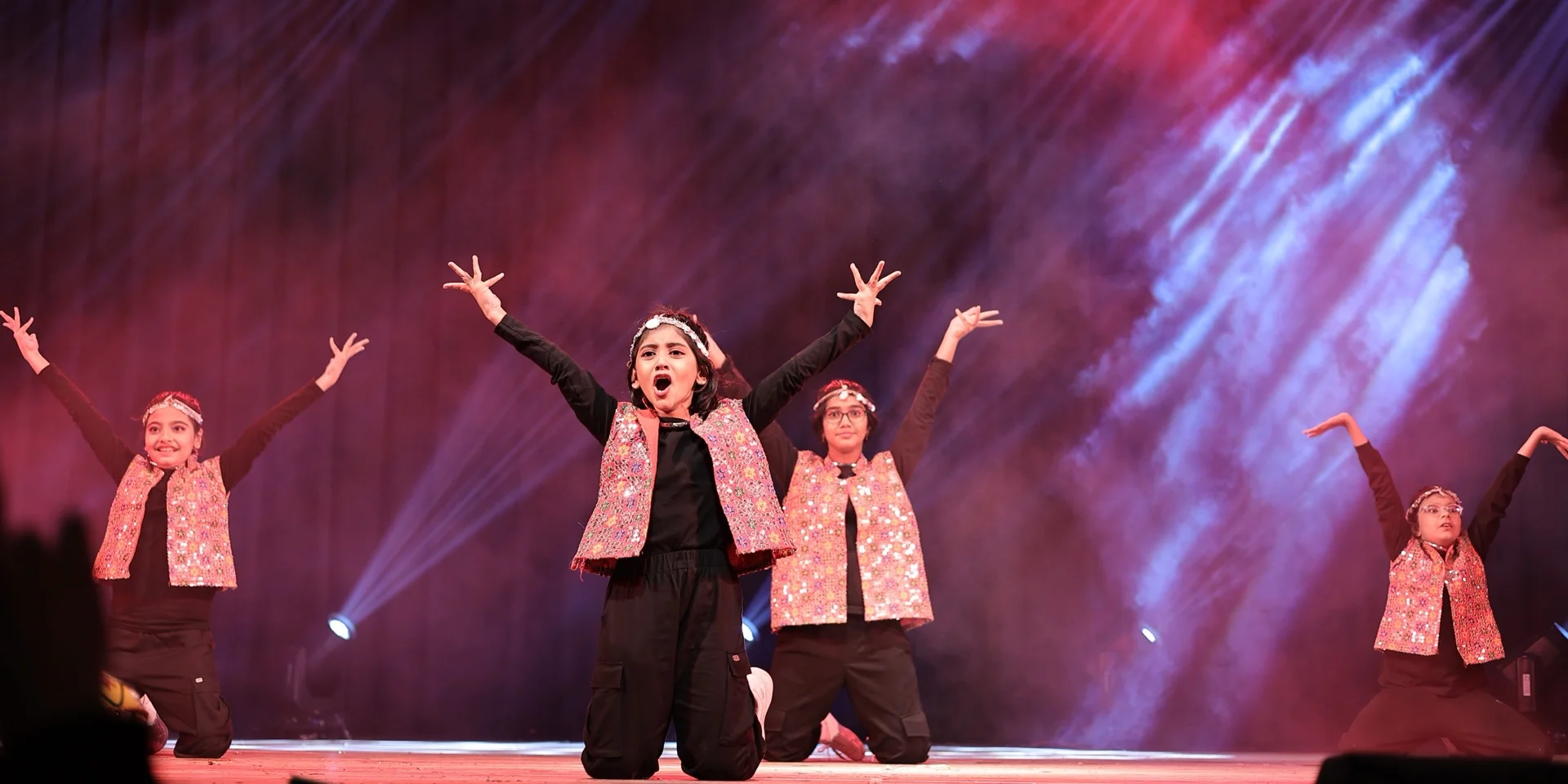
There is a moment every Dancing Wonder parent knows.
The stage goes dark. The music starts. And somewhere in that lineup of small, costumed, impossibly earnest little people — your child walks out.
Back straight. Eyes forward. Doing the thing they have been quietly building all year.
That moment — the one you will screenshot from the video and send to every grandparent in the family — is what Dancing Wonder 2026 is built for.
Registrations are open now at ₹1,000 — closes permanently 31st July. No registrations after 31st July.
A Glimpse of Dancing Wonder


What Is Dancing Wonder?
Dancing Wonder is Twist N Turns’ annual junior showcase — one of Kolkata’s longest-running children’s stage events, running since 2014.
Two evenings. Saturday 19 December and Sunday 20 December 2026. Hundreds of children aged 4 to 12, each performing the choreography they have spent months building. Hip Hop. Bollywood. Ballet. Contemporary. Jazz. Creative Movement for the littlest ones.
Not a competition. Not a graded exam. Not an audition for something.
Just your child — prepared, proud, and performing on a real stage with professional lights, live sound, and a full audience that is there entirely for them.
Every child who performs receives a certificate and a keepsake memento. Every batch gets proper stage time — not a rushed cameo. And the atmosphere? Think warmth, cheering, and a car ride home where your child cannot stop talking.
Why This Show Matters for Your Child — The Science Behind It
You already sense it. The confidence that comes from doing something hard in front of people. The quiet pride that follows. What you might not know is that developmental psychology has been studying this for decades — and the findings are striking.
Stage performance is the strongest confidence-builder that exists for this age group
When a child completes a public performance they have genuinely prepared for, psychologists call it a mastery experience. According to Albert Bandura’s foundational research on self-efficacy — still the most cited framework in child development — mastery experiences are the most powerful source of self-belief a child can have. More powerful than praise. More powerful than being told they are talented.
The child does not think “someone told me I was good.” They think: “I did that. I went out there and I did that.”
That thought — once formed — does not leave easily.
Ages 4–12 is the brain’s peak window for this kind of learning
The brain’s capacity for motor-cognitive integration — where physical movement and mental development reinforce each other — is at its highest between ages 4 and 12. Dance at this age is not just exercise. It is neurological development. Memorising choreography activates the same neural pathways as mathematical reasoning. Multi-sensory rehearsal (music, movement, spatial awareness, timing) builds cross-hemispheric brain connectivity that benefits focus, memory, and academic performance.
After 12, the brain can still learn all of this — but the efficiency drops sharply. The window your child is in right now is the window.
Managing stage nerves builds emotional regulation for everything else
The nervousness before a performance and the discipline to go out anyway — that is emotional regulation being trained in real time. Children who learn to manage performance anxiety develop a toolkit they use for exams, social challenges, and adolescence. They learn to tolerate discomfort without quitting. That skill transfers directly to academic persistence — something every Kolkata parent cares deeply about.
Group performance builds a different kind of friendship
The bond formed backstage — anxiety shared, preparation shared, triumph shared — creates unusually deep connections between children. It is a different quality of friendship from classroom socialising. These are children who went through something together.
Not a Competition. Something Better.
Here is something worth saying clearly: Dancing Wonder has no judges. No rankings. No winners and no losers.
That is not a compromise. It is a design decision — and the research backs it.
Competition at ages 4–8 consistently produces performance anxiety that reduces a child’s willingness to participate in performing arts in the future. When the experience of performing becomes associated with being judged and potentially losing, children start self-protecting. They stop trying things. The bold ones narrow. The shy ones disappear entirely.
Dancing Wonder is built on the opposite principle.
When there are no winners, every child on that stage succeeds completely. The shy child and the natural performer walk off with the same dignity. The child who struggled in session one and the child who picked it up immediately both performed. Both families cheer.
And you — as a parent — get to simply watch your child. Not compare them to the child next to them. Not wonder what the judge thought. Just watch them.
That, consistently, is what Dancing Wonder parents tell us is the part they did not expect: how much they enjoyed it.
The 40-Session Rule — Why It Protects Your Child
Every registered child must complete 40 class sessions at Twist N Turns before the December show to be cleared to perform.
Parents sometimes ask whether this rule is strict. It is. Here is why that is good news for your child.
Dancing Wonder is a real stage show. Professional lighting. Live sound. A full audience. Multiple choreographies back-to-back across two evenings. For a child to genuinely enjoy that experience — rather than feel overwhelmed by it — they need the preparation that 40 sessions provides.
- 40 sessions means they know their choreography — not just vaguely, but in their body. When the lights come up, the muscle memory takes over. They are free to feel the moment rather than panic about the next move.
- 40 sessions builds stage fitness — performing is physically demanding. Children who have trained consistently have the stamina to perform without wilting.
- 40 sessions means the instructor knows your child — their temperament, their strengths, the moments where they need encouragement. No child goes on stage without their teacher’s confidence behind them.
We do not put nervous, under-prepared children on stage. The 40-session rule is not there to exclude — it is there to guarantee every child a wonderful experience.
If your child is not currently enrolled, they can still participate — but they need to start immediately. Call 98310 18015 to find your nearest studio and book a free trial.
The Details at a Glance
| Show dates | Saturday 19 & Sunday 20 December 2026 |
| Venue | Eastern Zonal Cultural Centre (EZCC), Salt Lake, Kolkata |
| Age group | 4 to 12 years |
| Registration closes | 31st July 2026 — hard deadline |
| Registration fee | ₹1,000 per child · online · non-refundable · closes 31st July |
| Show contribution | ₹2,500 per child · at studio desk · due by 30th Sep 2026 |
| Costume | As per actuals · confirmed after eligibility |
| Eligibility | 40 completed class sessions |
| Format | Non-competitive, two-night showcase |
| Withdrawal deadline | 30th October 2026 — no refund after this date |
“But My Child Is Too Shy…”
We hear this often. It is the most common reason parents hesitate — and the most common reason they are glad they didn’t.
Shyness is not an obstacle to the stage. It is the reason for it.
The stage is precisely where shy children discover they are capable of far more than they — and sometimes their parents — imagined. In a non-competitive, well-prepared, fully-supported environment like Dancing Wonder, the experience does not overwhelm a shy child. It reveals something to them about themselves.
Most children who resist at session one are the hardest to get to leave by session ten. The first class is almost always the answer — it either settles the question or unlocks something entirely new.
If your child is shy, reserved, or uncertain: call us. That is exactly who this is for.
From Previous Shows — What Dancing Wonder Looks Like
Dancing Wonder has been running for over a decade. Here is a glimpse of past editions — the energy, the costumes, the joy on every young dancer’s face.


Your child could be on this stage in December 2026.
Registration open at ₹1,000 — closes permanently 31st July. Call 98310 18015 or speak to your child’s instructor to register.
Payment Schedule — What You Pay and When
Refund & Withdrawal Policy
Withdrawal permitted any time before 30th October 2026. The ₹2,500 show contribution (if paid) will be refunded after applicable deductions — bank/gateway charges and GST. The ₹500 registration fee is non-refundable. Costume costs, once ordered, cannot be refunded. After 30th October 2026 — no withdrawal or refund is applicable.
How to Register — Four Simple Steps
Step 1 — Register by 31st July 2026 (closes permanently)
Speak to your child’s instructor, visit the front desk at any of our 8 studios, or click Register Your Child below. Registration fee is ₹1,000. Registrations close permanently on 31st July — choreography casting begins immediately after.
Step 2 — Pay ₹1,000 online to secure the place (open until 31st July)
Non-refundable. Paid securely via Razorpay (UPI, cards, net banking). This locks your child’s spot in the programme.
Step 3 — Pay ₹2,500 show contribution by 30th September
Paid at the studio desk. This covers production costs, stage management, lighting, sound, and show operations. No online payment for this — speak to your studio’s front desk any time before the deadline.
Step 4 — Complete 40 sessions, then costume fitting and the show
Your child attends regular classes. Once 40 sessions are confirmed, costume details and cost (at actuals) are shared. Then: fitting, final rehearsals, and the show at Eastern Zonal Cultural Centre, Salt Lake on 19 & 20 December 2026.
What to Do Right Now
If your child is already enrolled at Twist N Turns, talk to their instructor today. Let them know you want to register for Dancing Wonder 2026. They can begin planning with your child in mind.
If your child is not yet enrolled, the window is open — but only just. Starting in May gives enough time to reach 40 sessions before December, provided classes begin immediately. Call 98310 18015 to find your nearest studio and book a free trial. The first class will tell you everything you need to know.
₹1,000 registration — open now, closes permanently 31st July 2026. No registrations after 31st July.
A Final Word
Every year, Dancing Wonder reminds us why Twist N Turns exists.
Not to produce professional dancers. Not to win trophies. But to give children — your children, aged 4 to 12, right now, in this exact window of development — the experience of discovering what they are capable of.
The child who walked into class eight months ago unsure whether they even liked dancing.
The one who stood at the back during every rehearsal.
The one you were not sure was ready.
That child — in December, under the lights, in front of an audience — walks out and owns the stage.
It happens every year. It will happen again in 2026.
Make sure your child is part of it.
₹1,000 · Open now · Closes permanently 31st July 2026
Call 98310 18015 or speak to your Twist N Turns instructor to register. ₹1,000 registration open until 31st July 2026 — closes permanently after that.