Kolkata, the City of Joy, has always worn its cultural heart on its sleeve — Rabindra Sangeet echoing through Para festivals, classical Odissi in grand auditoriums, Durga Puja pandals bursting with folk performance. But walk into a studio, a neighbourhood maidan, or a reclaimed warehouse on any given weekend, and you’ll find something newer, louder, and just as electric: hip hop dance.
From underground cyphers to national reality show winners, from studio beginners to Olympic-recognised athletes, Kolkata’s hip hop dance scene is not just growing — it is thriving. Here is the full story of how it got here, what it looks like today, and why now is the perfect time to join in.
A Brief History: How Hip Hop Dance Came to Kolkata
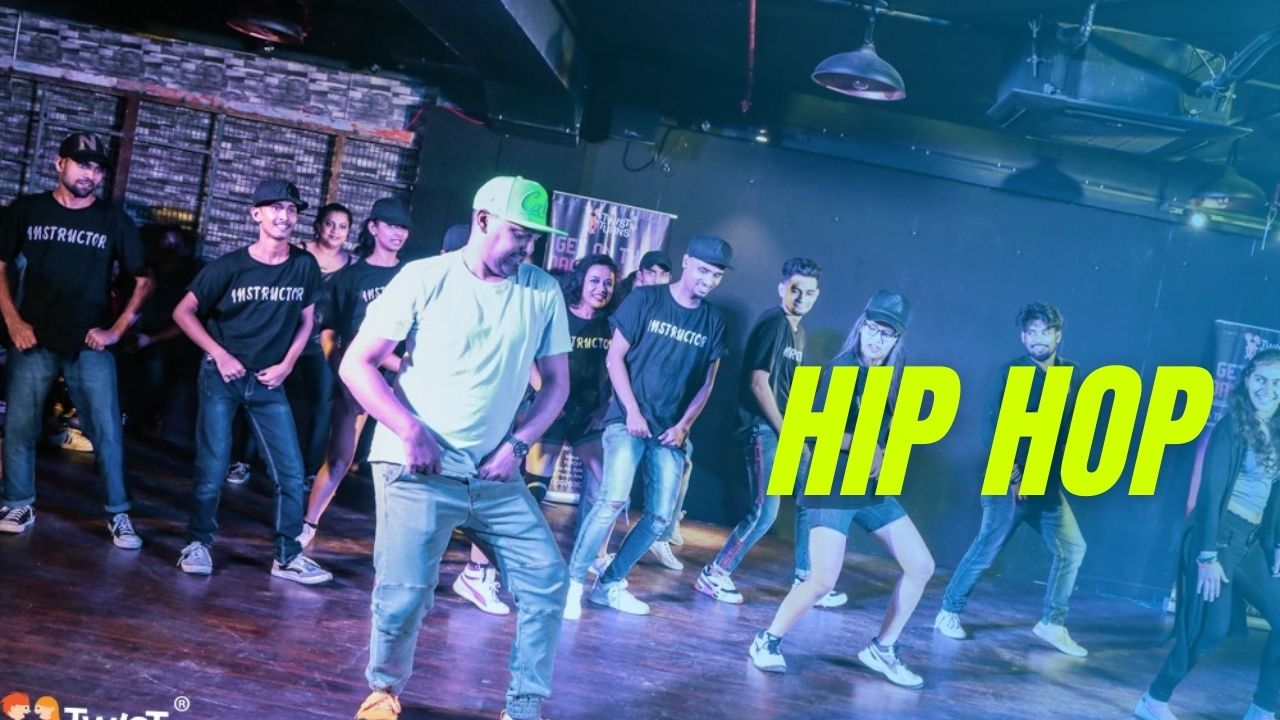
Hip hop dance was born in the early 1970s in the South Bronx, New York — a creative response to poverty, tension, and a need for community expression. By the late 1980s, it had reached India.
Two landmark American films — Wild Style (1982) and Beat Street (1984) — planted the seed. Young people in Kolkata watched breakdancers spin on cardboard, and something clicked.
Kolkata’s early hip hop timeline:
- Late 1980s: The first breakers appear in Kolkata, practising on maidans and in basements. Music blasted from car speakers. Cardboard was the dance floor.
- Early 2000s: A tight-knit underground crew scene develops. Kolkata distinguishes itself nationally as a crew-centric city — unlike Delhi or Mumbai’s more solo-artist scenes, Kolkata dancers move in groups.
- 2008–09: Break Guruz is co-founded, with B-Boy Hotshot (Jayanta) — a Kolkata native — among its co-founders. This marks the first organised breaking institution with Kolkata roots.
- 2010s: Multiple crews form and compete nationally. Dance studios begin offering structured hip hop classes. The underground scene and the studio world begin to merge.
- 2020s: Kolkata-born dancers reach national TV audiences. The city’s hip hop scene earns recognition far beyond West Bengal.
“Kolkata had more crews than solo dancers — that’s what made its scene feel like a genuine community rather than just a collection of individuals.” — observed in multiple accounts of the early Indian street dance scene.
The Styles: Hip Hop Is a Family, Not a Single Dance
One of the most common misconceptions about hip hop dance is that it is one thing. It is actually a family of related street dance forms, each with its own history, technique, and culture. Here is a quick guide:
Breaking (B-boying / B-girling)
The original hip hop dance, born in the South Bronx in the early 1970s. Breaking has four core elements:
- Toprock — rhythmic upright footwork at the start of a set
- Downrock — floor-level footwork and transitions (the “6-step” is the most fundamental)
- Power moves — acrobatic spinning moves: windmills, headspins, flares, airflares
- Freezes / suicides — dramatic held poses that punctuate a set
Breaking made history at the Paris 2024 Olympics as a debuting sport — a landmark moment that has changed how parents and institutions across India view it.
Popping
Born in Fresno, California in the 1970s. Based on rapidly contracting and releasing muscles to create a sharp “pop” in the body, timed precisely to the music. Sub-styles include:
- Boogaloo — fluid, rolling, liquid movement
- Waving — a continuous wave through the arms and body
- Tutting — sharp, geometric angular positions (think right angles)
- The Robot — rigid, mechanical isolation
Kolkata’s own Boogie LLB (Anish Mitra) is a celebrated waving/boogaloo practitioner who won India’s Best Dancer Season 3 on Sony TV.
Locking
Created by Don Campbell in Los Angeles in the early 1970s. Known for its playful, funky character — large arm and hand gestures, freezing in position (“locking”), and a joyful, comedic performance quality. Great for beginners because its grooves are highly accessible.
Krumping
Born in South Central Los Angeles in the early 2000s. Characterised by intensely energetic, explosive movement — chest pops, arm swings, powerful stomps. Rooted in emotional release and raw self-expression. Fast, sharp, and cathartic.
Waacking
Originally from Los Angeles LGBTQ+ underground clubs in the 1970s, danced to disco and funk. Defined by rapid, dramatic arm movements and theatrical posing. Kolkata has the Calcutta Waack Pack — one of the few crews in India specialising exclusively in Waacking and Vogueing.
House Dance
Emerged from Chicago and New York’s house music scene in the 1980s. Fluid, fast footwork with influences from jazz, capoeira, and Lindy Hop. More social and collaborative in nature.
Hip Hop Freestyle / New Style
The catch-all, groove-based style seen in music videos and Bollywood choreography. Emphasises rhythm, personal expression, and improvisation. The most taught style in studios — and the best entry point for most beginners.
Kolkata’s Hip Hop Scene Today: Crews, Artists & Events
Notable Crews
FullStop One of Kolkata’s most celebrated choreography crews, working across popping, locking, krump, old-school hip hop, and B-boying. Member Sambo Mukherjee was a runner-up on Footloose — India’s first street dance reality show — and now conducts workshops nationwide.
Crafts of Kammotionn (CKN) A powerhouse all-style crew with national championship titles including:
- Winner, Salah (Delhi, 2014)
- Winner, Kolkata Hood Hop Solo Popping (2014)
- Winner, Hip Hop International Solo Zonals (2014)
- Winner, all-girls all-style battle, Freeze (Bengaluru, 2014)
Member Mekhola Bose also competes with the Calcutta Waack Pack.
Calcutta Waack Pack Kolkata’s dedicated Waacking and Vogueing crew — a rarity even on the national scene.
Break Guruz Co-founded with B-Boy Hotshot (Jayanta), a Kolkata native — one of India’s pioneering institutionalised breaking organisations.
Notable Artist: Boogie LLB (Anish Mitra)
Born in Kolkata in 1997, Anish Mitra is the most visible proof of what Kolkata’s hip hop scene can produce:
- Winner, India’s Best Dancer Season 3 (Sony TV) — the most prestigious national dance competition
- Winner, Red Bull Dance Your Style East India category
- He credits watching Chhau dancers perform during Durga Puja as his original inspiration — a powerful example of Kolkata’s classical roots fuelling contemporary street expression
Key Events
Rasta Jam (Street Jam) Curated by Kolkata collective Park Circus in partnership with Orbs Cure Labs, Rasta Jam is held in a reclaimed PWD warehouse with graffiti-covered pillars — a deliberate evocation of hip hop’s original ethos. Six hours of music, dance, DJing, rap, and open battles. Dancers from any style are welcome. Entry level: open. Competitive format: live challenge battles. The event was run on just ₹25,000, funded by the performers themselves.
Kolkata Hood Hop A city-level battle event with dedicated categories for popping, locking, and all-style — evidence of a thriving local competitive infrastructure.
Cypherholics (Roc Fresh) Running since 2010 across Mumbai, Delhi, Kolkata, Shillong, and other cities — one of the longest-running jam and battle series in Indian street dance.
Bollywood’s Role: Making Hip Hop Mainstream
If underground cyphers built the foundation, Bollywood amplified it to millions.
Key turning points:
- Shiamak Davar introduced contemporary Western dance — including hip hop elements — to mainstream Bollywood beginning with Dil To Pagal Hai (1997), earning the title “guru of contemporary dance in India.”
- Remo D’Souza’s ABCD trilogy was a cultural earthquake:
- ABCD: Any Body Can Dance (2013) — sparked a national conversation about street dance as a legitimate art form
- ABCD 2 (2015) — documented real street dancers’ journey to the World Hip Hop Championship (bronze medal), featuring 50+ dance styles
- Street Dancer 3D (2020) — continued the celebration of India’s street dance talent
- Gully Boy (2019, 13 Filmfare Awards including Best Film) — though focused on rap, its massive cultural impact legitimised all of hip hop culture in the eyes of mainstream India. Young audiences embraced hip hop as an Indian art form of resistance, not a foreign import.
The “Bolly-Hop” fusion — blending expressive Bollywood movements with hip hop technique — has been particularly powerful in Kolkata, making the style accessible to students with no prior street dance experience and driving enrolment at studios across the city.
Social Media: The New Dance Classroom
Social media has democratised access to hip hop dance in a way nothing else has.
The TikTok era and what followed:
- Before its ban in June 2020, TikTok was the central platform for dance challenges and viral trends in India.
- After the ban, Instagram launched Reels in India before the rest of the world, and YouTube launched Shorts in India six months ahead of the global rollout — India became a global testing ground for short-form dance video.
- 15 of the top 20 most-used songs on Reels globally in 2022 were from India (Instagram data) — reflecting India’s extraordinary ownership of this format.
What this means for Kolkata:
- A dancer in Kolkata can now study world-class breaking, popping, or waacking from their bedroom — for free.
- Local talent can reach national and global audiences with nothing more than a phone and a clear space.
- Dance challenges on Reels regularly introduce tens of thousands of young people to hip hop movement who would never have walked into a studio otherwise.
- Fusion content — hip hop blended with Kathak, Odissi, or Bharatanatyam — performs especially well and has created a new creative language that is distinctly Indian.
Why Learn Hip Hop Dance? The Benefits Are Real
Physical Benefits
- Excellent cardiovascular workout — a vigorous hip hop session burns 300–400+ calories per hour, improving heart health, endurance, and lung capacity
- Full-body strength and flexibility — varied movements engage muscle groups across the whole body
- Coordination and balance — tracking rhythm, controlling isolations, and learning new movement patterns dramatically improve body awareness
- Core strength — essential for power moves, freezes, and the controlled techniques of popping and locking
Mental Health Benefits
- Research has found that hip hop dance reduces stress to the same degree as aerobic exercise, with the added benefit of musical and social engagement
- Learning choreography sequences improves cognitive function and memory — the brain is constantly being challenged
- The endorphin release from movement and music is a powerful tool against anxiety and depression
- Hip hop’s framework of rhythm and resilience actively helps practitioners process difficulty and build emotional strength
Social Benefits
- Dance classes create genuine community — students bond over shared challenge and shared joy
- Hip hop’s core values — respect, authenticity, community, creative expression — build positive peer culture
- Cypher formats teach sportsmanship, turn-taking, and appreciation for others’ creativity
- For young people in Kolkata, hip hop offers access to a global community with shared language and values
Creative Benefits
- Hip hop is foundationally an improvisational art — you are actively encouraged to develop your own movement voice
- The culture explicitly values originality over imitation — this builds real creative confidence
- Freestyling — improvising movement in real time to music — is a powerful tool for self-expression that extends far beyond dance
Career Opportunities in Hip Hop Dance
The career landscape for hip hop dancers in India has never been stronger.
| Path | Entry-Level Earnings | Growth Potential |
|---|---|---|
| Teaching / Instruction | ₹10,000–25,000/month | ₹50,000+/month for established instructors |
| Choreography | ₹20,000–40,000/month | Significantly higher in Bollywood / regional film |
| Reality Shows | Prize money + visibility | Career-transforming platform |
| Music Videos & Advertising | Per-project fees | Consistent work with strong portfolio |
| Online Content Creation | Monetisation from Day 1 | Multiple Indian dancers have built full careers |
| Studio Entrepreneurship | Variable | High demand for structured hip hop education |
| International Competition | Prize money + sponsorship | Olympic pathway now open for breaking |
Kolkata also has a thriving Tollywood (Bengali film industry) market for choreographers — a local opportunity often overlooked in conversations dominated by Bollywood.
The competitive scene:
- Red Bull BC One — the world’s most prestigious breaking competition holds India cypher rounds annually. B-Boy Flying Machine (Arif Chaudhary) holds six India titles and has reached the World Final Top 16.
- Red Bull Dance Your Style — all-styles battle; 2024 World Final was held in Mumbai, with 51+ countries competing.
- World Hip Hop Dance Championship — Kings United (the crew depicted in ABCD 2) won bronze in 2015 and then took USD 1 million on NBC’s World of Dance (2019) with a perfect score of 100.
- Hip Hop India (Amazon MX Player, 2025) — India’s first dedicated hip hop dance reality show, Season 2 drew 20.1 million viewers in five weeks.
Hip Hop and Classical Dance: Opposites That Complete Each Other
Kolkata is a city of classical tradition. Many parents wonder: will hip hop conflict with my child’s classical training? The answer, backed by experience, is the opposite.
| Dimension | Classical Indian Dance | Hip Hop Dance |
|---|---|---|
| Origins | 2,000+ years, codified tradition | Born 1970s, community-created |
| Structure | Highly structured grammar | Primarily improvisational |
| Training | Guru-shishya parampara | Cyphers, peer learning, self-teaching |
| Expressive vocabulary | Mudras, abhinaya, footwork | Groove, power, rhythm, personal style |
| Music | Classical ragas, talas | Hip hop, funk, soul, electronic |
Why they complement each other:
- Bharatanatyam’s intricate footwork and breaking’s downrock both demand extraordinary rhythmic precision. Dancers trained in one typically find the other accessible faster than expected.
- Odissi’s tribhanga (three-bend posture) and popping’s isolation techniques both require granular control of individual body segments — each deepens the other.
- Choreographer Usha Jey, classically trained in Bharatanatyam, has created internationally acclaimed fusion work pairing it with hip hop.
- Desi Hoppers — the first Indian dance team on NBC’s World of Dance — won the competition with hip hop and Indian cultural dance fusion, receiving praise from judges Jennifer Lopez, Ne-Yo, and Derek Hough.
In Kolkata, many students have found that classical training gives them the musicality and body discipline that accelerates hip hop learning — and hip hop gives classical dancers the improvisation and personal voice their training didn’t include.
10 Tips for Beginners in Kolkata
Ready to start? Here is what every new hip hop dancer should know:
-
Start with the groove, not the flashy moves. The groove — the rhythmic bounce and sway — is the foundation of everything. Without it, even correct moves look stiff.
-
Wear the right gear. Loose, breathable clothing and flat-soled trainers (not thick running shoes). Avoid jeans.
-
Know the class format. A good beginner class: warm-up → isolation drills and basic footwork → 8-count choreography breakdown → full run-through with music. Consistent studios follow this.
-
Set a realistic timeline. Months 1–2: basic grooves and footwork start to feel natural. Months 3–4: you can execute a short piece with confidence. 6 months+: personal style emerges, sub-styles become available. Daily practice of even 15–20 minutes compounds quickly.
-
Pick the style that excites you. Watch videos of breaking, popping, locking, krump, and house. Notice which one makes you want to move. That is where you start.
-
Supplement class time with YouTube. Free, world-class tutorials are available from the best teachers on the planet. Watch. Replicate. Repeat.
-
Attend a cypher or jam. Events like Rasta Jam are open to all levels. You will learn more about hip hop culture in one evening there than in weeks of solo practice.
-
Understand that hip hop is a culture, not just moves. Its four elements are: DJing, MCing (rap), graffiti art, and breaking/dance. The more you understand the culture, the better dancer you become.
-
Classical training is an advantage, not a conflict. If you have a background in Bharatanatyam, Odissi, Kathak, or Rabindra Nritya, you are already ahead — use it.
-
Be patient with yourself and enjoy the process. The culture values originality over perfection. A cypher celebrates effort, courage, and personality as much as technical skill.
Kolkata Is Ready — Are You?
From the maidans of the 1980s to national TV screens, from underground warehouses to the Paris 2024 Olympic stage, the journey of hip hop in Kolkata has been extraordinary. The city’s rich classical heritage did not resist this new form — it absorbed it, shaped it, and made it its own.
At Twist N Turns, we teach hip hop dance across all our Kolkata studios — Salt Lake, Ballygunge, New Alipore, Dum Dum, Ruby, Rajarhat, and Madhyamgram. Whether you are 5 or 45, complete beginner or classically trained, we have a batch for you. Our instructors bring competitive experience, genuine passion, and a deep understanding of both the art and the culture.
The groove is waiting. Come find yours.
Frequently Asked Questions
What hip hop dance styles does Twist N Turns teach across its Kolkata studios?
Twist N Turns teaches Hip Hop Freestyle/New Style as the primary entry point for beginners, alongside Breaking fundamentals, Popping, Locking, and Waacking as students progress. Classes are available at all 8 locations — Salt Lake, Ballygunge, New Alipore, Dum Dum Park, Ruby, Rajarhat, and Madhyamgram — and cater to students from age 5 through adults.
What is the difference between breaking, popping, locking, and hip hop freestyle?
Breaking (B-boying/B-girling) is the original hip hop dance with toprock, downrock, power moves, and freezes — it debuted at the Paris 2024 Olympics. Popping is based on contracting and releasing muscles to create sharp pops in the body, often with waving and tutting sub-styles. Locking features playful, funky large gestures with deliberate freezes. Hip Hop Freestyle, also called New Style, is the groove-based improvisational style seen in music videos and Bollywood — it is the best entry point for most beginners.
Will learning hip hop conflict with my child’s classical dance training?
No — classical and hip hop training complement each other strongly. Bharatanatyam’s intricate footwork and breaking’s downrock both demand rhythmic precision. Odissi’s tribhanga posture and popping’s isolations both require granular body control. Many Twist N Turns students find that classical training accelerates their hip hop learning, and vice versa.
Who are some notable hip hop dancers from Kolkata?
Kolkata has produced standout national-level artists. Boogie LLB (Anish Mitra), born in Kolkata in 1997, won India’s Best Dancer Season 3 on Sony TV. Sambo Mukherjee of crew FullStop was a runner-up on Footloose, India’s first street dance reality show. The city also has Crafts of Kammotionn (CKN), with multiple national battle titles, and the Calcutta Waack Pack — one of very few crews in India dedicated to Waacking and Vogueing.
How do I start learning hip hop dance at Twist N Turns in Kolkata?
The best starting point is a beginner Hip Hop Freestyle class, which focuses on groove, foundational footwork, and short choreography. No prior dance experience is required. Book a free trial class or call 98310 18015 to find the nearest studio with available hip hop batches for your age group.