The bride’s mother, her sisters, a handful of cousins. Nobody has danced on stage since school. And the sangeet is in six weeks. This is the most common situation we see, and it is very solvable.
A family routine works when it is short, split into roles, and built around who is actually in the room. Call 9831018015 to plan yours, or start with the steps below.
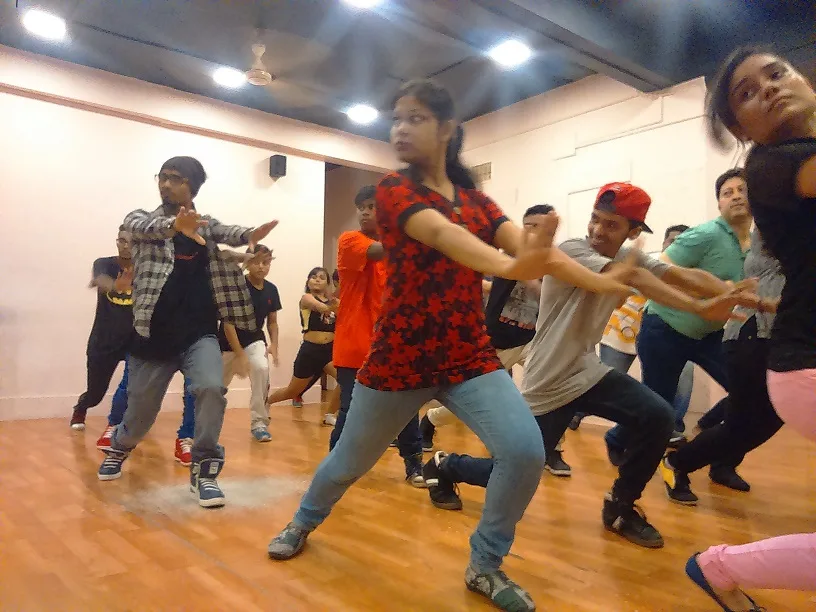
Start With Roles, Not Steps
Split the group by comfort, not age:
- Anchors: two or three confident dancers at the front who carry the counts.
- Core: the main group who do the simple repeated pattern.
- Moments: one or two people who get a short featured moment, such as the mother’s walk to the front or a cousin’s solo line.
A Simple Timeline
| When | What |
|---|---|
| 8 weeks before | Choose songs; decide who is in the group |
| 6 weeks | First session: learn the chorus pattern |
| 4 weeks | Add verses and one formation change |
| 2 weeks | Costume, floor spacing, full run-through |
| Final week | Two run-throughs; record one for feedback |
Song Choices That Work For Everyone
Open with a song the older generation loves, then switch to a recent hit for the younger group. A 2–3 minute medley of two songs keeps both groups happy. See our Sangeet guide for ideas.
Prices
Private sessions are ₹2,500 per hour, whether one-to-one or for a group, and the rate is the same at every studio. The total depends on how many hours your routine needs; tell us the group size and the number of songs and we will estimate it.
How to Handle Different Generations in One Routine
The biggest challenge in a family set is not the steps. It is that a 62-year-old aunt, a 35-year-old sister and a 12-year-old cousin move very differently. A few rules keep everyone comfortable:
- Never give everyone the same difficulty. Write two or three versions of each move: a simple one, a standard one and a showy one.
- Let the elders lead the emotional moments. A mother’s slow walk to the front, a grandmother’s single expressive gesture or a hand-on-heart moment often gets the loudest cheer of the evening.
- Keep the young group moving at the edges and back. Fast footwork and jumps look best as a frame around the calmer centre.
- Teach in small groups first. Rehearse the older and younger groups separately for the first two sessions, then join them for the third.
Costumes and Footwear
Family members will be dressed in heavy sarees, lehengas or sherwanis. Test the routine in the actual outfit at least twice:
- Practise turns with the dupatta or saree pallu to avoid tripping.
- Wear the actual shoes or go barefoot on the stage, but never switch on the day.
- Keep jewellery light for jumping or fast turns.
Practising Between Sessions
Ten minutes a day beats one long weekend rehearsal. Record the choreographer’s walkthrough on a phone so everyone can practise at home. A shared family chat with the video, the song cut and the count sheet helps relatives living in other cities keep up.
Common Mistakes
- Picking a song that is too long. More than three minutes loses both dancers and audience.
- Trying to teach everyone every step. Roles make a group look better.
- Leaving the full run-through to the sangeet day. Do at least two complete runs with music, in costume, before the event.
- Ignoring the floor. Ask the venue for the stage size early and mark the same space at home.
Making It Fun for Non-Dancers
Many relatives agree to dance only if they do not feel judged. Set the tone early: this is a celebration, not an audition. Keep the first session relaxed, let people laugh at themselves, and praise confidence rather than accuracy. Families who enjoy rehearsing usually enjoy performing.
Planning With Twist N Turns
Tell us the event date, the number of dancers, their ages and the songs you have in mind. We will suggest how to split roles and structure the medley. For a larger plan, see our Sangeet choreography guide and our couple choreography article. Call 9831018015.