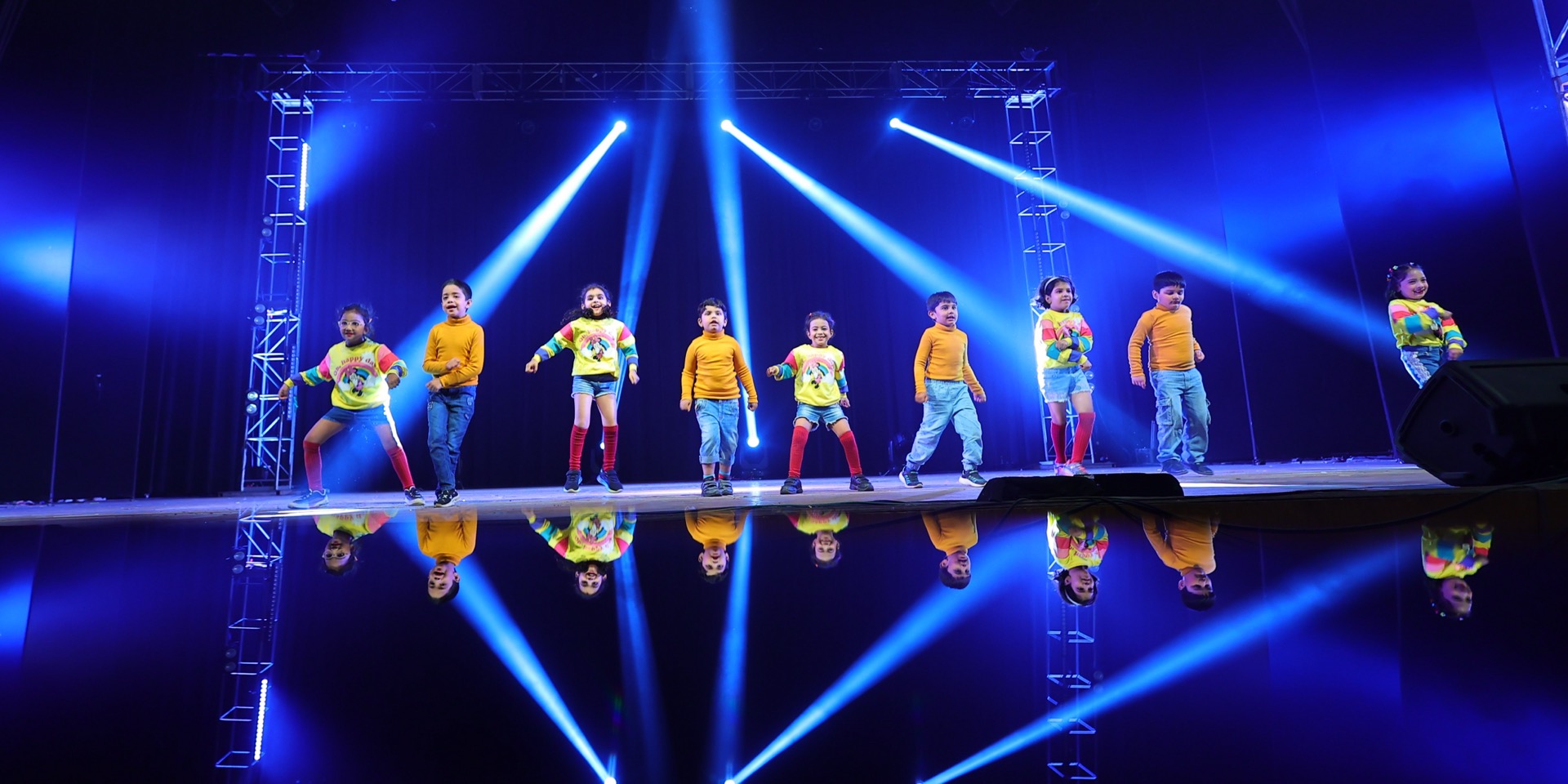
School annual day choreography has one job: make every child look confident on stage. Not every student is a dancer. Some children know counts. Some only remember the chorus. Some freeze when the lights come on. A good annual day routine is built for all of them — simple enough to rehearse, clean enough for parents to film, and exciting enough to feel like the biggest moment of the school year.
This guide gives teachers, parents, and cultural coordinators a practical shortlist: 30 Bollywood songs that work for the school annual day (or annual function), age-wise performance ideas, rehearsal timelines, and the choreography rules that keep a class performance from becoming chaos.
If your school or class needs help turning a song into a stage-ready performance, Twist N Turns can support with choreography, formations, rehearsal planning, and final polishing. Book a dance choreography enquiry or call 9831018015.
How to Choose an Annual Day Song
The best annual day song is not always the newest song. It is the song children can perform cleanly.
Use these filters before you choose:
- Age fit: the lyrics, gestures, and energy should match the class.
- Clear beat: children need a steady rhythm they can hear without counting too hard.
- Repeatable hook: annual day dances need one step that the whole class can own.
- Formation-friendly sections: the song should allow lines, circles, diagonals, and centre moments.
- Clean edit potential: most class performances need a 2-4 minute edit, not the full track.
- Lyrics check: read the full lyrics before you decide. Several popular current songs need a school-safe edit or a simplified version for younger classes.
For younger students, joy beats complexity. For older students, structure beats random viral steps. The goal is not to copy a film sequence; it is to make a classroom group look organised and proud on stage.
30 Bollywood Songs for School Annual Day and Annual Function
These are not “top songs” in the abstract. They are songs that can be staged with school groups, mixed skill levels, and realistic rehearsal time.
Junior School: Classes Nursery to 2
- Bum Bum Bole — playful, clear rhythm, easy arm actions.
- Lakdi Ki Kathi — timeless for very young children.
- Taare Zameen Par title track — expressive and gentle.
- Badal Pe Paon Hai — bright, optimistic, good for simple travelling steps.
- Chanda Chamke — cute, rhythmic, easy to dramatise.
- Aal Izz Well — energetic and familiar, best with a clean school edit.
Best format: keep the choreography in two rows, add one circle section, and end with a big freeze pose. Avoid complicated floor patterns for this age.
Primary School Annual Day Songs: Classes 3 to 5
- Gallan Goodiyaan — group-friendly, festive, instantly recognisable.
- Nachde Ne Saare — perfect for coordinated hand patterns and partner changes.
- London Thumakda — joyful, easy to teach, good for mixed groups.
- Chak Dhoom Dhoom — strong for school-stage energy.
- Kar Har Maidaan Fateh — motivational and clean.
- Badtameez Dil — works if simplified and made age-appropriate.
Best format: use two hook steps, one diagonal crossing, one boys-vs-girls response, and one full-class finale. Keep the steps big and readable.
Middle School: Classes 6 to 8
- Jai Ho — ideal for a patriotic or achievement-themed segment.
- Chak De India — strong for sports day or school pride themes.
- Zinda — dramatic and athletic.
- Malhari — powerful, but needs disciplined formations.
- Naatu Naatu — high energy; use only if students can rehearse footwork properly.
- Apna Time Aayega — good for confidence and youth themes.
Best format: build a 3-minute medley with one motivational opener, one high-energy centre section, and one strong finale. This age group can handle levels, floor changes, and formation swaps if rehearsals are regular.
Senior School: Classes 9 to 12
- Jhoome Jo Pathaan — crowd response, strong stage presence.
- Tauba Tauba — current, hook-driven, but needs clean styling.
- Aaj Ki Raat — stylish and dramatic; choose a school-safe edit.
- Chaleya — good for mixed groups and softer choreography.
- Kesariya — works for lyrical, semi-classical, or contemporary fusion.
- Khalasi — powerful for folk-fusion and cultural themes.
Best format: treat senior school like a showcase. Give confident dancers harder sections, but keep the chorus simple enough for everyone. This avoids the common problem where four students perform and the rest become background.
All-School Finale Songs
- Mauja Hi Mauja — reliable celebration closer.
- Salaam India — good for patriotic annual day finales.
- Deva Shree Ganesha — dramatic opening or finale for cultural programmes.
- Om Shanti Om medley — nostalgic, parent-friendly, easy to theme.
- Des Rangeela — strong Independence/Republic Day crossover.
- Dil Dhadakne Do / Gallan Goodiyaan medley — family-friendly finale energy.
Best format: keep the finale simple. Bring each class or group on stage in waves, repeat the same hook, and end with the school name, house colours, or annual day theme visible in the formation.
Age-Wise Choreography Rules
Nursery to Class 2: Repeat More Than You Think
Young children do not need many steps. They need repetition, spacing, and smiles. Use 4-count or 8-count actions, avoid fast turns, and let teachers or senior students stand near the wings as visual anchors.
The best junior choreography usually has:
- one opening pose
- two repeated hook steps
- one circle or train movement
- one partner wave
- one final photo pose
Classes 3 to 5: Use Storytelling
Primary students can remember a simple story. Instead of only teaching steps, give the dance a plot: celebration, friendship, monsoon, school pride, dream journey, or festival. Storytelling gives children a reason to move, not just a count to follow.
This is also a good age for kids dance training, because regular classes teach coordination and confidence long before the annual day rush begins.
Classes 6 to 8: Teach Formations Early
Middle school students can handle choreography, but they often underestimate spacing. Teach formation changes from the first rehearsal. If the students learn steps first and formations later, the final week becomes stressful.
Use:
- diagonals for strong stage pictures
- centre windows for solo or duet moments
- staggered rows so every child is visible
- clean transitions instead of running across the stage
Classes 9 to 12: Give Them Ownership
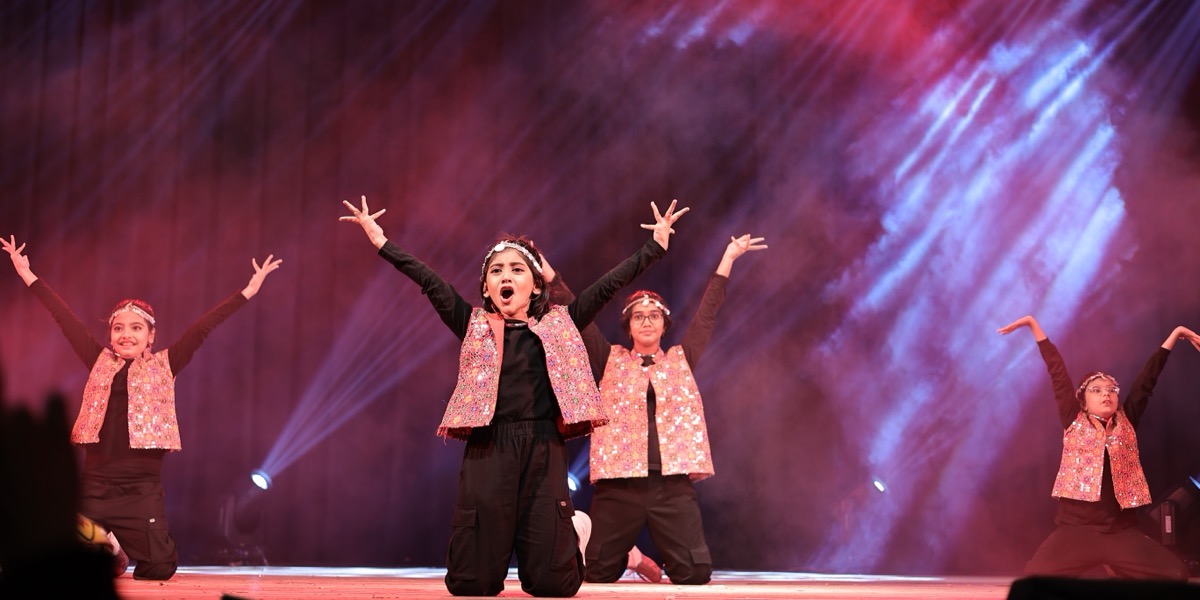
Senior students perform better when they feel the choreography belongs to them. Let them contribute one hook step or choose between two music edits, but keep the final structure controlled. This gives ownership without losing polish.
For senior groups, Bollywood choreography, Hip Hop, and semi-classical fusion all work well depending on the school theme.
The 6-Week Rehearsal Plan
Annual day choreography usually fails for one reason: rehearsals start late. Six weeks is enough for one class performance if the plan is disciplined.
| Week | Focus | What should be ready |
|---|---|---|
| Week 1 | Song edit + grouping | Final music, student list, basic positions |
| Week 2 | Hook choreography | Main chorus, opening pose, first formation |
| Week 3 | Full routine skeleton | All sections taught, even if rough |
| Week 4 | Formation cleaning | Entry, exits, spacing, transitions |
| Week 5 | Costume + expression | Props, costume test, face direction, energy |
| Week 6 | Stage polish | Full run-throughs, final video check, backup plan |
If the event is less than three weeks away, reduce the ambition. Pick one song, repeat one hook, and focus on a clean final picture. A simple performance done well is better than a complicated one that collapses on stage.
Common Annual Day Mistakes
Choosing a song because it is viral. Viral steps often look good on one dancer and bad on 30 children in school uniforms. Choose for stage, not only for Reels.
Making the front row do everything. Parents notice when only four children are visible. Good choreography gives every child at least one visible moment.
Ignoring entry and exit. The performance begins before the music starts. A messy entrance makes the whole routine feel unprepared.
Adding props too late. Dupattas, flags, ribbons, hats, and placards need rehearsal time. Props added in the last week usually distract children from the dance.
No final video review. Always record the performance once before event day. The camera catches spacing mistakes that the rehearsal room hides.
When to Bring in a Choreographer
Teachers can absolutely manage simple routines. A choreographer becomes useful when:
- the school has multiple class performances to coordinate
- the stage is large and formations matter
- the event theme needs a polished opening or finale
- the students are mixed ability
- the annual day is being filmed professionally
- parents or management expect a high-standard show
Twist N Turns can help with full choreography, one-time polishing, music editing guidance, formation design, and final rehearsal review. For corporate annual days, see our corporate dance workshop and annual day choreography page. For schools and children, start with a private choreography enquiry or book a free trial if your child wants regular classes before performance season.
Quick Checklist Before Event Day
- Final song edit saved in two places.
- Every child knows the opening position.
- Teachers know who enters from which side.
- Costumes have been tested with movement.
- Props are labelled by student name or class.
- One rehearsal video has been reviewed.
- The final pose is held for at least 5 seconds.
- Backup students know where to stand if someone is absent.
Annual day is not only about dance. It is about children discovering that they can stand under lights, remember their part, and enjoy applause. That confidence lasts much longer than the song.
Related Reading
- Kids Dance Classes in Kolkata
- Bollywood Dance Classes in Kolkata
- Hip Hop Dance Classes Near Me
- Private Dance Classes and Choreography
- Dance Classes for Young Children (Ages 4–6): What to Expect at Your First Class
- Saraswati Puja Group Dance Ideas for Kids in Kolkata
Frequently Asked Questions
How early should a school start annual day dance rehearsals?
For one clean class performance, start 4-6 weeks before annual day. For a full school programme with multiple grades, themes, costume coordination, and stage blocking, start 8-10 weeks before the event.
How many songs should one annual day performance use?
For junior classes, one song or a 90-second edit is best. For middle and senior school, a 2-3 song medley works well if the transitions are simple and the students have enough rehearsal time.
Which Bollywood songs work best for junior school annual day dances?
Junior school performances work best with bright, clean, high-recognition songs such as Bum Bum Bole, Lakdi Ki Kathi, Gallan Goodiyaan, Nachde Ne Saare, and Badal Pe Paon Hai.
Can complete beginners perform on annual day?
Yes. Beginners need simple formations, repeatable hook steps, clear entry and exit points, and one strong freeze pose. The choreography should be built for confidence, not difficulty.
Does Twist N Turns choreograph school annual day performances in Kolkata?
Yes. Twist N Turns can help with song selection, choreography, rehearsal planning, formation design, stage blocking, and final polishing for schools, classes, and cultural groups in Kolkata.
What is the ideal length for an annual day dance?
For younger children, 2-3 minutes is ideal. For older students, 3-4 minutes can work if the music has clear sections and the choreography changes formations every 20-30 seconds.
Should school annual day dances use trending songs?
Trending songs help older students feel current, but schools should choose clean edits and avoid lyrics or gestures that feel unsuitable for the age group. A familiar, stage-safe song is better than a risky viral track.
How can parents help children prepare for annual day?
Parents can help by playing the final music edit at home, encouraging children to practise counts rather than copying random videos, and making sure costumes and rehearsal timings are settled early.
What are the best songs for a school annual function?
The best annual function songs are clean, familiar and easy to count: for junior classes Bum Bum Bole or Lakdi Ki Kathi, for primary classes Gallan Goodiyaan or Nachde Ne Saare, for middle school Jai Ho or Chak De India, and for a finale Mauja Hi Mauja or Salaam India. Always use a short edit and read the lyrics first.
Which songs suit a primary school annual day (classes 3 to 5)?
Primary classes do well with bright, group-friendly songs such as Gallan Goodiyaan, Nachde Ne Saare, London Thumakda, Chak Dhoom Dhoom and Kar Har Maidaan Fateh. Use two repeatable hook steps, one diagonal crossing and a full-class finale.