Saraswati Puja is one of the happiest days in a Bengali child’s year. On Vasant Panchami, which falls in the month of Magha (January or February), schools, housing complexes and neighbourhood committees across Kolkata hold the puja, and many follow it with an evening cultural programme where children perform for parents and neighbours. A group dance is often the highlight.
This guide gives you five group dance ideas for children, practical advice on music, costumes and staging, and a simple rehearsal plan, so a class of beginners can walk on stage confidently. If you would like help turning an idea into a polished performance, Twist N Turns can help with choreography and rehearsals — call 9831018015.
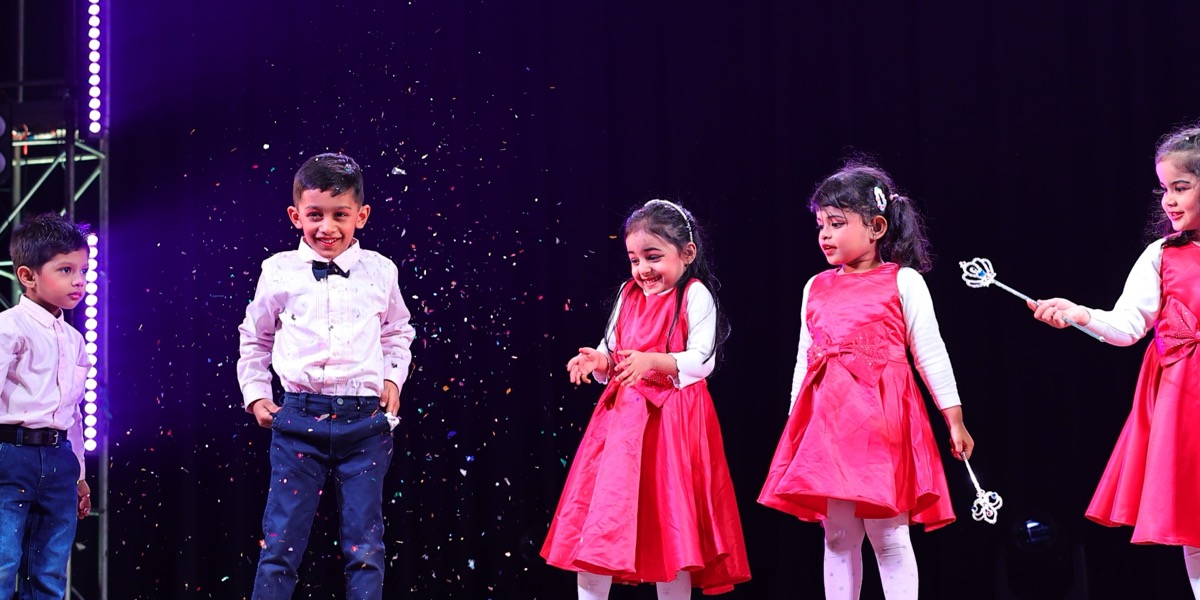
Five Group Dance Ideas for Saraswati Puja
1. Saraswati Vandana — a devotional group dance
A slow, graceful dance built around the traditional Saraswati Vandana (“Ya Kundendu Tusharahara Dhavala”), the best-known invocation of the goddess. Use gentle arm shapes, a circle that opens like a flower, and a still, respectful final pose. Best for ages 8 and above, who can hold slow movements with calm. Use a short, clean edit of the music, and keep the tone devotional throughout.
2. Basanta — a spring welcome dance
Vasant Panchami marks the arrival of spring, so a spring-themed dance fits naturally. Tagore’s Basanta songs such as “Ore Grihobashi” and “Aaji Dokhin Duar Khola” are well-known spring songs, and their flowing rhythm suits light, free movement — swaying, circling and a “door opening” moment where the group parts to welcome the season. Works for ages 6–12.
3. Pushpanjali — a flower-offering dance
Offering flowers (pushpanjali) is part of the puja itself, so a dance where children “offer” flowers to the goddess and the audience feels meaningful. Use paper or fabric flowers rather than real petals, which can make a stage slippery. Simple reaching, offering and bowing movements work for all ages.
4. Little Learners — a “spring is here” action dance
For ages 4–6, keep it short (about two minutes) and playful: blooming flowers, buzzing bees, a gentle walk in a line. Repeat each action four times, put the confident children at the front, and finish with one big group pose. Our Creative Movement classes are built on exactly this kind of music-led play.
5. Classical-inspired group dance
If your group includes children who learn classical dance, build a piece around simple classical-inspired steps and hand gestures with the rest of the group forming a graceful backdrop. Bharatanatyam students can anchor the piece while beginners follow simple repeated movements.
Choosing Music
- Keep the tone consistent. Do not mix devotional music with film item numbers in one performance.
- Use a short edit. Three to four minutes is enough; two minutes for the youngest.
- Choose music with a clear beat so children can count in 4s and 8s.
- Confirm permissions. If your event is public or recorded, check what music licensing the venue or organisers need.
Costumes and Props
- Yellow is the traditional colour of the day, often paired with white or cream.
- Comfort first: clothes children can move in, hems and dupattas short enough not to trip on, and hair secured.
- Footwear: agree one rule for the whole group, based on the stage floor.
- Props: paper or fabric flowers and battery-operated lamps. Avoid real petals on stage and open flames around children.
Staging for School Halls and Neighbourhood Stages
- Know your stage size and rehearse in a space the same size.
- Use simple formations: a circle, two lines, a “V”, or a centre line that opens outward. Teach formation changes from the first rehearsal, not the last.
- Put the youngest at the front where parents can see them, and give each age band one clear role.
- Plan for the weather. Winter mornings and evenings are cold, so warm up the children before they go on.
A Simple Six-Week Rehearsal Plan
| Week | Focus |
|---|---|
| 1 | Choose the idea and music edit; teach the opening pose and first hook step |
| 2 | Teach the main steps in small sections, repeating each many times |
| 3 | Add formations and transitions |
| 4 | Full run-throughs with music; fix spacing |
| 5 | Costumes and props on; rehearse in a space the size of the stage |
| 6 | Dress rehearsal, then a calm final run |
For a longer school-wide programme, see our annual day choreography guide, which has an age-wise breakdown and a fuller rehearsal plan.
How Twist N Turns Can Help
Twist N Turns can help with song selection, choreography, rehearsal planning, formation design, stage blocking and final polishing for schools, classes and cultural groups in Kolkata. Tell us the number of children, their ages, the event date and the stage size, and we will suggest what is possible.
Book a dance choreography enquiry · Call or WhatsApp 9831018015 · info@twistnturns.in
Want your child to be ready for next year’s stage? Our age-wise kids’ dance classes run from Creative Movement for toddlers to teen batches — book a free trial class to find a batch near you.
Frequently Asked Questions
When should we start rehearsing a Saraswati Puja group dance?
Start 4–6 weeks before the event for one group dance, and 8 weeks or more if several classes are performing. Saraswati Puja falls on Vasant Panchami in January or February, so planning in November or December gives you comfortable time, including for school holidays and winter mornings.
How long should a children’s Saraswati Puja dance be?
Three to four minutes is plenty for a school or neighbourhood cultural programme. For the youngest children (ages 4–6), keep it to about two minutes with simple repeated actions.
What songs suit a Saraswati Puja dance?
Traditional devotional pieces such as the Saraswati Vandana (“Ya Kundendu Tusharahara Dhavala”) suit slow, graceful group dances. For a spring theme, Tagore’s Basanta songs such as “Ore Grihobashi” and “Aaji Dokhin Duar Khola” are well-known choices. Keep the music respectful and use a short, clean edit.
What should children wear for a Saraswati Puja performance?
Yellow is the traditional colour of the day, with white or cream as a common pairing. Choose comfortable, easy-to-move-in clothes, keep dupattas and drapes short enough not to trip on, and check the footwear rule for the stage floor.
Can complete beginners join a Saraswati Puja group dance?
Yes. A well-designed group dance uses simple repeated movements, clear formations and one memorable moment, so children without any dance training can perform confidently.
Can we use real flowers or lamps on stage?
We recommend paper or fabric flowers and battery-operated lamps. Real petals can make a stage slippery, and an open flame is a safety risk around children and costumes.
Does Twist N Turns choreograph Saraswati Puja performances?
Twist N Turns can help with song selection, choreography, rehearsal planning, formation design, stage blocking and final polishing for schools, classes and cultural groups in Kolkata. Call 9831018015 with the number of children, their ages and the event date.
How do we handle a mixed-age group?
Give each age band its own role: the youngest children do simple repeated actions at the front, middle ages carry the main steps, and the eldest lead the formation changes. Mixed-age groups look best when everyone has a clear job.
What if the stage is small or the programme is outdoors?
Choose circle or two-line formations that need little space, rehearse in a space the same size as the stage, and plan a short warm-up for cold winter mornings or evenings.
Where can my child take regular dance classes before the next puja season?
Twist N Turns runs age-wise classes for children from Creative Movement for toddlers through to teen batches. See our kids’ dance classes guide and book a trial class to find a batch near you.